
Subsribe to our email newsletter today to receive update on the latest news, blogs and special offers!

Safety Boots
A range of boots with steel or composite safety toes. All meet European safety standards for protective footwear.
- Free P&P
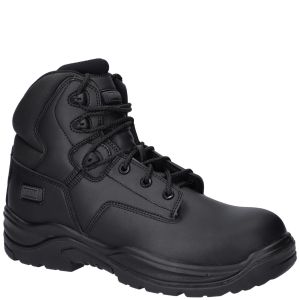
- Free P&P
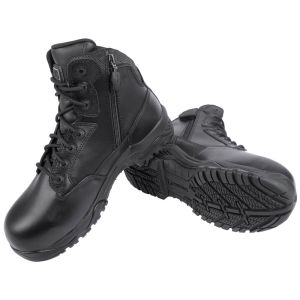
- Free P&P
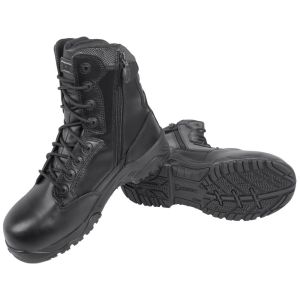


Safety Boots FAQs
What are safety boots?
Safety boots are work boots with a protective toe cap that guards your feet against impact and crushing. In the UK and Europe they must meet EN ISO 20345, which means the toe cap can withstand a 200 joule impact and 15 kN of compression. Many safety boots also add slip-resistant soles, antistatic properties, waterproofing or a midsole that resists nails and sharp objects.
What does S3 mean on safety boots?
S3 is one of the safety ratings under EN ISO 20345. An S3 boot has a protective toe cap, a closed heel, an antistatic sole, an energy-absorbing heel and a water-resistant upper. It also has a midsole that resists nails and sharp objects, plus a cleated outsole for grip. S3 safety boots are a good all-round choice for outdoor, site and patrol work.
What is the difference between S1, S1P, S2 and S3 safety boots?
S1: a protective toe cap, closed heel, antistatic sole and energy-absorbing heel.
S1P: everything in S1, plus a midsole that resists nails and sharp objects.
S2: everything in S1, plus a water-resistant upper.
S3: everything in S2, plus the protective midsole and a cleated outsole.
For wet or outdoor work, choose S3.
Are composite toe boots as safe as steel toe boots?
Yes. Composite and steel toe caps must pass the same EN ISO 20345 tests for impact and compression. Composite toe caps are lighter, don’t conduct heat or cold, and won’t set off metal detectors. That makes composite safety boots ideal for security, police and airport roles. Steel toe caps are thinner and often cheaper.
Do all safety boots have steel toe caps?
No. Many safety boots, including most of our range, use composite toe caps. They give the same certified protection without the weight of steel. Check the product description for 'CT' (composite toe) or 'steel toe'.
Are safety boots waterproof?
Not all safety boots are waterproof. Look for an S3 rating or a waterproof membrane. Our Magnum Strike Force WP boots and Blueline Patrol side zip boots are fully waterproof, which makes them ideal for outdoor patrol and site work in all weather.
What are the most comfortable safety boots?
The most comfortable safety boots are lightweight, with a composite toe cap, a cushioned midsole and good ankle support. A side zip makes them quick to put on and take off during long shifts. Our side zip safety boots are popular with security and uniformed staff who are on their feet all day.
Is there VAT on safety boots?
Protective boots that meet the EN ISO 20345 standard can be zero-rated for VAT when they’re sold to an individual for their own use. The zero rate doesn’t apply when an employer buys boots for its staff. For full details, see HMRC VAT Notice 714.
Do employers have to pay for safety boots?
Yes. Under the Personal Protective Equipment at Work Regulations, if a risk assessment shows that safety footwear is needed, the employer must provide it free of charge. They can’t make staff pay for required PPE.
Are safety boots a legal requirement?
Safety boots are a legal requirement wherever a workplace risk assessment identifies a risk of foot injury, such as falling objects, crushing or sharp objects underfoot. In those cases employers must provide them and employees must wear them.

Filter


